Skip to content

Ivan Lewis: ‘Justine Greening has some serious questions to answer’

1 May 2013

Ivan Lewis MP, Shadow International Development Secretary,  responding to Justine Greening’s claim that the decision to end DfID’s bilateral aid programme to South Africa was agreed by the South African government, said:


“Justine Greening has serious questions to answer – her claim that her decision was made with the agreement of her South African counterparts has been completely contradicted by the South African Government.


“This looks like a serious breach of trust with one of our most important strategic partners. Justine Greening must explain why she is saying one thing about her conduct while the South African Government is saying another.


“Behaving in what looks like a high-handed and patronising fashion towards South Africa is no way to treat one of the world’s key emerging nations and is not in Britain’s national interest.”


Editor’s Notes


1. “UK to end direct financial support to South Africa”. Justine Greening stated: “I have agreed with my South African counterparts that South Africa is now in a position to fund its own development. It is right that our relationship changes to one of mutual cooperation and trade, one that is focused on delivering benefits for the people of Britain and South Africa as well as for Africa as a whole.”


https://www.gov.uk/government/news/uk-to-end-direct-financial-support-to-south-africa


2.  Response from the South African Department of International Relations and Cooperation: “UK unilateral decision to terminate Official Development Aid to SA”


http://www.dfa.gov.za/docs/2013/uk0430.html. 30th April 2013

Swazi crackdown on the right to organise: Free Maxwell Dlamini

30 April 2013

Maxwell Dlamini, Secretary General of the Swaziland Youth Congress was detained last week and has been charged with sedition (actions that are deemed to tend toward insurrection against the government).

Maxwell’s arrest follows a number of events over recent years in which student unionists in Swaziland have been unable to carry out their legitimate activities without fear of arrest or harassment by the Swazi government.

When Maxwell was initially arrested, strangely enough, it was the week of my first NUS election back in 2011 and the day after my election, I was travelling out there to see old friends and complete my dissertation. I ended up at his trial and was shocked at the number of times they point-blank refused to charge him. He was detained without trial for months and eventually released on condition of the most expensive bail in Swazi history.


Swaziland in particular holds a special place in my heart – I spent a year there back in the third year of my degree to carry out research for my dissertation and my parents married out there too.


Spending a year in a place like Swaziland was the biggest honour and it is still a place I miss. I believe it has a bright future ahead, but with the continued crackdowns, I fear for its future. The UK government has to do more – imagine a society where political organisations are banned? And a state of emergency in place for over 40 years? And when the Swazi nation gave asylum to so many fleeing apartheid.


The re-arrest of Maxwell, the outgoing president of the Swazi NUS for organising “an elections meeting” should rightly make us angry.


Help LCID show solidarity today with Maxwell and the people of Swaziland, because until they have the right to organise freely – I fear for the future of this tiny but inspiring nation.


Help the campaign here http://www.nus.org.uk/freemaxwell


Written by Danielle Grufferty, Student Officer at LCID

Simple summaries of Your Britain policy papers

21 April 2013

Your Britain, Labour’s planning site to get the grassroots involved in policy for 2015, recently published 10 policy papers outlining strategy so far. Two of these were of interest to LCID, so we’ve produced a handy bullet-point summary for our supporters. Click the titles to download the papers from Your Britain.


Tax avoidance: tax havens


  • Public are angry about the existence of tax havens.
  • Tax cut to the top 1 % earners has made this anger worse.
  • People paying fair share of tax is non-negotiable.
  • Tax laws need to be strengthened to make it more difficult for loop holes to be found.
  • Cuts to HMRC are impacted on the departments ability to crack down on tax cheats.
  • The Economist has reported the existence of around 50 – 60 tax havens worldwide, meaning this is not just a domestic issue.
  • UK is seen as best placed to help close tax havens.
  • UK tax havens should be required to produce a list of British citizens with money there.
  • Labour should help the UK lead the way in reaching an international agreement to stamp close tax havens and catch evaders, while rewarding those who pay their fair share of tax.
  • UK should look to the US and its Foreign Accounts Tax Compliance Act (FATCA) for guidance on cracking down on tax avoidance.
  • Essential that the UK cooperates with EU, current Government’s anti-EU bias may place such cooperation in jeopardy.
  • This issue should be a priority at the G8 meeting in June.


Britain’s role in a post-2015 development vision


  • There are 8 Millennium Development Goals (MDGs) which world leaders signed up to in 2000.
  • Labour needs to stay at the forefront of policy decisions till 2015.
  • Though not without problems, by and large the MDGs had a positive impact on international development.
  • Progress has been made on all goals but it has not been even and there is more to do in the next 2 years.
  • Post-2015 a new set of goals should be established.
  • Main focus is to eradicate global poverty.
  • Submissions to Your Britain focussed on a rights based approach around the following values: freedom, equality, solidarity, tolerance, respect for nature and shared responsibility.
  • There was also a large number of responses on committing to goals set out at Rio+20 to tackle environmental issues.
  • Roll out globally systems of universal healthcare, compulsory education and a minimum wage for workers – paid for by a global financial transaction tax.

Scottish Labour supports justice at home and abroad

20 April 2013
Scottish Labour Conference sends strong message on Scottish Labour’s support for justice at home and abroad.
Image
A packed conference hall in Inverness heard powerful speeches from both Labour Leader Ed Miliband and Scottish Labour Leader, Johann Lamont. While they concentrated on Labour’s commitment to deliver on Social Justice at home, Shadow Foreign Secretary, Douglas Alexander stressed Scottish Labour’s proud tradition as an internationalist party fighting for justice at home and abroad.
Douglas also launched a short video on the theme of why we are passionately proud of Scottish Labour’s part in the fight for global justice. You can view it here.
The video highlights the role Scottish Labour politicians have played in tackling global poverty whether at the International Monetary Fund; on the Board of the World Bank; a Scottish Labour Chancellor playing a lead role at Gleneagles 2005 on Development in Africa and climate change. He also expresses pride in Scotland’s contribution to campaigning organisations like Amnesty, SCIAF, Oxfam and Christian Aid. When we boast that there is nowhere better than Scotland we always remember that there is somewhere bigger.
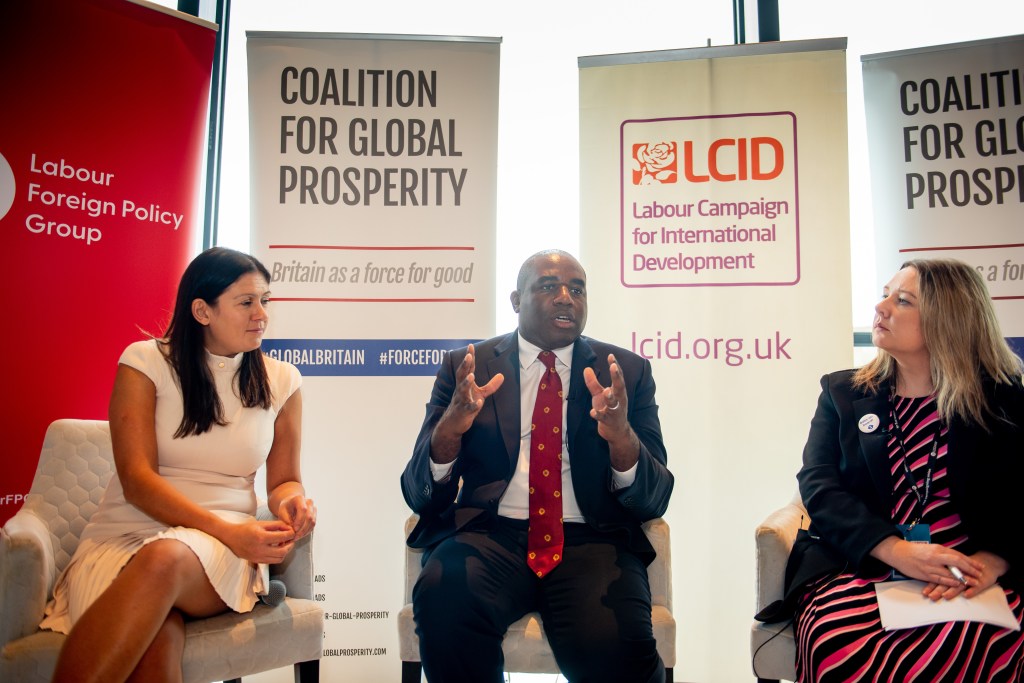
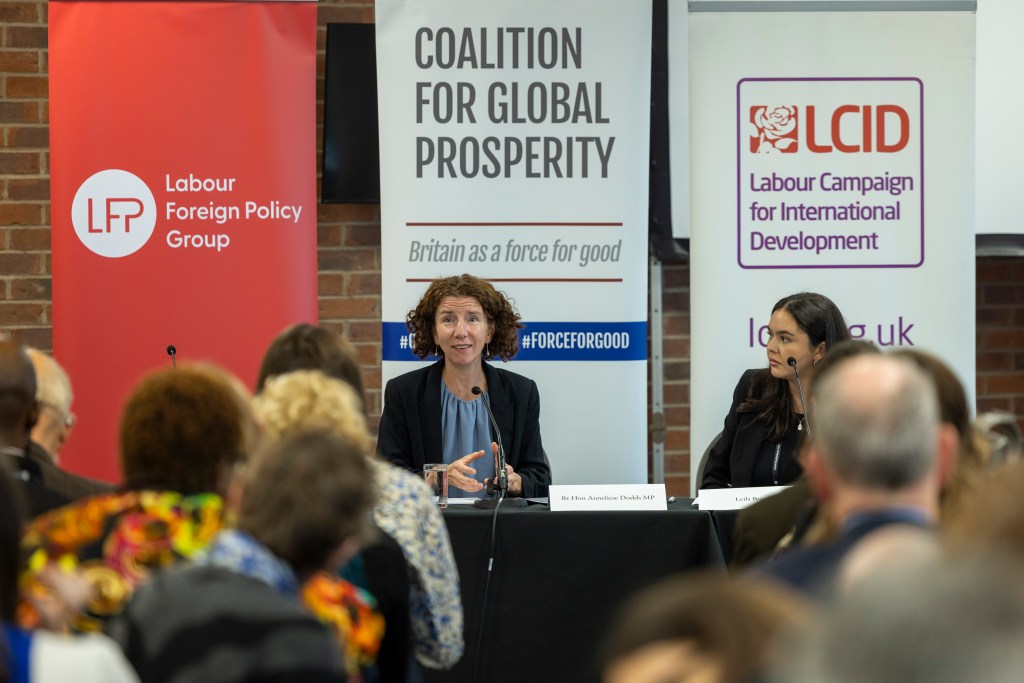
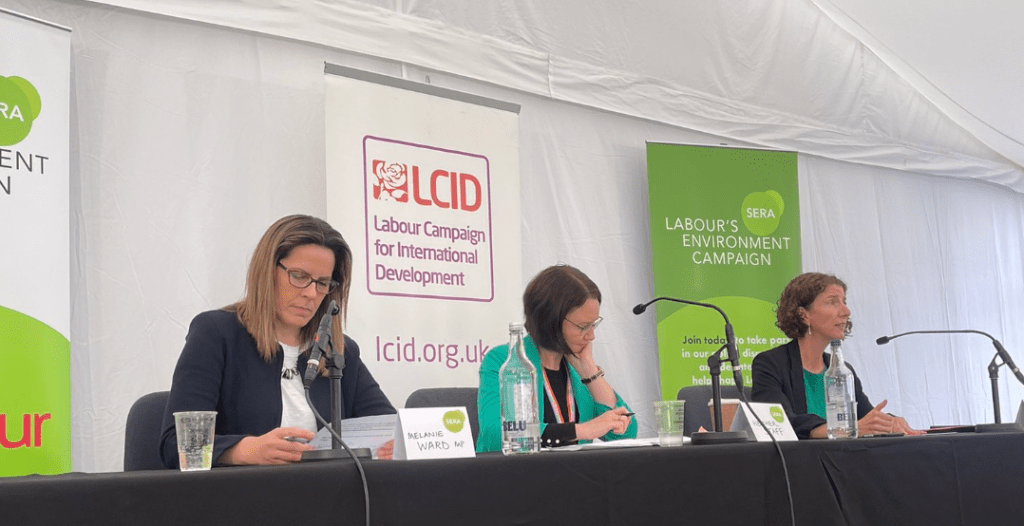
As well as Douglas Alexander’s keynote address, the Conference Fringe had meetings organised by LCID (picture with invited speakers Douglas Alexander and Ann McKechin); Oxfam IF Campaign; Labour Friends of Palestine; and Human Trafficking in Scotland. Exhibition Stalls included Action for Southern Africa Scotland, SCIAF; Oxfam and WWF Scotland.
Alastair Osborne is Scottish Officer for LCID

Global injustice of child malnutrition must be tackled

16 April 2013

Responding to the launch of UNICEF’s global Child Nutrition Report, Ivan Lewis MP, Shadow Secretary of State for International Development, has said:


UNICEF’s report demonstrates the vital link between the first 1000 days of a child’s life and breaking the cycle of poverty. It is deplorable that in this day and age 2.3 million children under the age of five globally still die every year from malnutrition and 165 million children are stunted as a result of not receiving enough nutritious food within the first 1000 days of life. 


This global injustice needs to be tackled. The evidence is clear both in the UK and internationally that investment in the earliest years makes the biggest difference to a child’s development – physically, intellectually and emotionally – giving them a head start to living a fulfilling and productive life.  Early years development is essential and this evidence should surely be applied to the poorest, most disadvantaged children in every society. This is also why I have asked Tessa Jowell supported by Sarah Brown to lead a global campaign to ensure early years development is part of any new post-2015 framework.


The UK has a unique opportunity at the G8 this summer to show global leadership on this issue and to pledge the additional funding required to tackle chronic malnutrition.


Giving every child, regardless of where they live, the best start in life is the surest way to achieving poverty reduction, more vibrant societies and greater equality. UNICEF’s report will do a great deal to draw the world’s attention to the importance of investing in children, and I hope the Hunger Summit and G8 special event on tax, trade and transparency will take big steps towards ending extreme poverty, starting with our children.

Response from Ivan Lewis MP on Government announcement on Pakistan aid

4 April 2013

Ivan Lewis MP, Labour’s Shadow International Development Secretary, responding to the findings in the International Development Select Committee’s report on aid to Pakistan, said:


“The International Development Select Committee are right to make the link between Pakistan’s tax system and UK aid.


“Hard pressed British taxpayers have a right to expect that alongside our support, the Government of Pakistan is taking all necessary steps  to collect the tax revenue which will play a crucial part in the country’s long term capacity to end high levels of poverty.


“It is also true that we will only be able to achieve our aim to end aid dependency globally by 2030, if there is a concerted effort to prevent the tax dodging by some multinational companies which the evidence shows denies developing countries vast amounts of revenue.


“That is why David Cameron must use the UK’s chairmanship of the G8 to replace his tough rhetoric on tax with effective global action.”

The Impact of Scottish Independence on International Development

30 March 2013

 “Should Scotland be an internationalist country – Yes/No”

Now that would be a debate worth having. In all the discussion that has taken place on the forthcoming Independence Referendum, a great deal has been said about Scotland’s potential status in the world (European Union; NATO; UN), but very little has been said about Scotland’s contribution to the world. The debate needs to focus much more on the practical and political implications and impact of independence. Some very useful work has been done in this respect on the implications for defence. However, virtually nothing has been said about the possible impact on International Development. The Scottish Government has begun to treat its small but very effective Scottish International Development Fund as if it were an embryonic DFID.  It only exists because of a provision in the Scotland Act which allows for the Scottish Government to ‘assist Ministers of the Crown’ in this reserved area. However the SNP Government has used this and the post of Minister for External Affairs and International Development to create a kind provisional Scottish Foreign Office.


The Minister for External Affairs. Humza Yasouf, is on record as saying earlier this year that an independent Scotland will increase its International Development Fund from around £9m at present to hundreds of millions and that Scotland’s aspiration would be to surpass a target of 0.7% of national income and aim for 1%.


This leap over logic completely ignores the fact that Scotland already contributes nearly £1billion to the UK overseas development total of £10.7billion (which includes the Scottish Government’s £9m fund). Scots do this through their 9.6% contribution to the UK tax take.


Should Scotland become independent it will in all probability have an international development budget of ‘hundreds of millions’ because it will have access to the tax take that previously contributed to the UK. This will depend on the political priorities of a Scottish Government, and, crucially, the resources available to it. But there will be a loss of the economy of scale of UK Aid in all the bilateral projects and the multilateral projects through Europe, World Bank; UN; G8 etc will not have the benefit of the UK’s considerable influence and experience in shaping and delivering programmes. As for the boasting that Scotland will sail past the 0.7% target and go for 1%, this is just one more example of where the SNP are prepared to promise extra resources (often the same resources) for all kinds of things. The financial dividend of Scotland becoming non nuclear is promised to fund conventional defence forces we can be proud of; it is also promised for much needed housing regeneration; and now for increases in international development. Experts are not even convinced that an independent Scotland will become non nuclear, and, if so, that there will be a non nuclear dividend.


In reaching its 0.7% target, the UK  joins a very select group currently comprising only five countries within the Development Assistance Committee that have reached the target of 0.7% of their national income in aid: Norway, Sweden, Netherlands, Denmark and Luxembourg. Many other countries that the SNP hold out to be examples of the benefits that accrue from independence are well below the target.


 A very important but separate issue is the impact that independence would have on the 500 plus DFID jobs currently located at Abercrombie House in East Kilbride. The balance of work in East Kilbride has moved from what it was originally set up as—effectively a transactional and corporate support function—to one that’s much more part of the core headquarters of the Department with responsibility for bilateral and multilateral projects. Just as with the debate on defence, there would be no simple transfer of Scottish based jobs or services to a Scottish Government. These jobs serve the whole DFID operation and there would have to be a disentanglement of the whole operation. A continuing UK DFID would not locate a third of its staff in another country.


The SNP like to paint a picture of an independent Scotland where, free from the shackles of the UK, Scotland can pursue its natural preference for progressive politics. Scotland doesn’t need to look to an independent future to achieve a progressive contribution to international development. We can be proud of our progressive record to date as part of the UK. Labour MPs from Scotland have helped secure UK majority Labour Governments committed to pushing international development high up the political agenda. Labour appointed the first Minister of Overseas Development, established DFID with a Secretary of State in the cabinet; doubled the aid budget; secured debt relief; set in place the 0.7% target of national income by 2013; and in 2013 that target is reached  Today Scots can be immensely proud of their contribution to that record. Millions more children are in school, mothers give birth safely and AIDS sufferers have access to life-saving medicines because of decisions made by the Labour Government they helped elect. Budget after budget, international summit after international summit, a Labour Government fought on the side of the poor and the marginalised and transformed their lives for the better – and established Britain as a leading force for social justice in the world.


Leading figures on that path have included many Scottish MPs – Judith Hart; Tom Clarke; George Foulkes; Douglas Alexander and Gordon Brown. However, Scottish Independence would lead to the withdrawal of all Scottish MPs from Westminster, putting at risk the likelihood of a progressive majority to support keeping international development high on the political agenda of the rest of the UK. When the Tories came to power in 1979 the aid budget stood at 0.51% of national income. By the time Labour got back into office in 1997 it had shrunk to 0.26%. It could happen again. There might be the political will in an independent Scotland to maintain the 0.7% target; even to raise it to 1% – but 1% of what? Already the UK development budget is less than it should have been because of the Tories’ failed economic policies and there are powerful sections of the Tory Party who would like to see overseas aid cut. Labour’s record and commitment to maintaining and developing our international development goals are proven. The return of a Labour Government in 2015 would provide the opportunity for progressive post 2015 international development goals to be pursued and achieved. Why put this at risk by going down the unmarked road of Scottish Independence?

 Alastair Osborne is Scottish Officer for LCID

Follow

Get every new post delivered to your Inbox.

Join 26 other followers